
Do Happier People Make Better Money Decisions?
 Saving
  Spending Wisely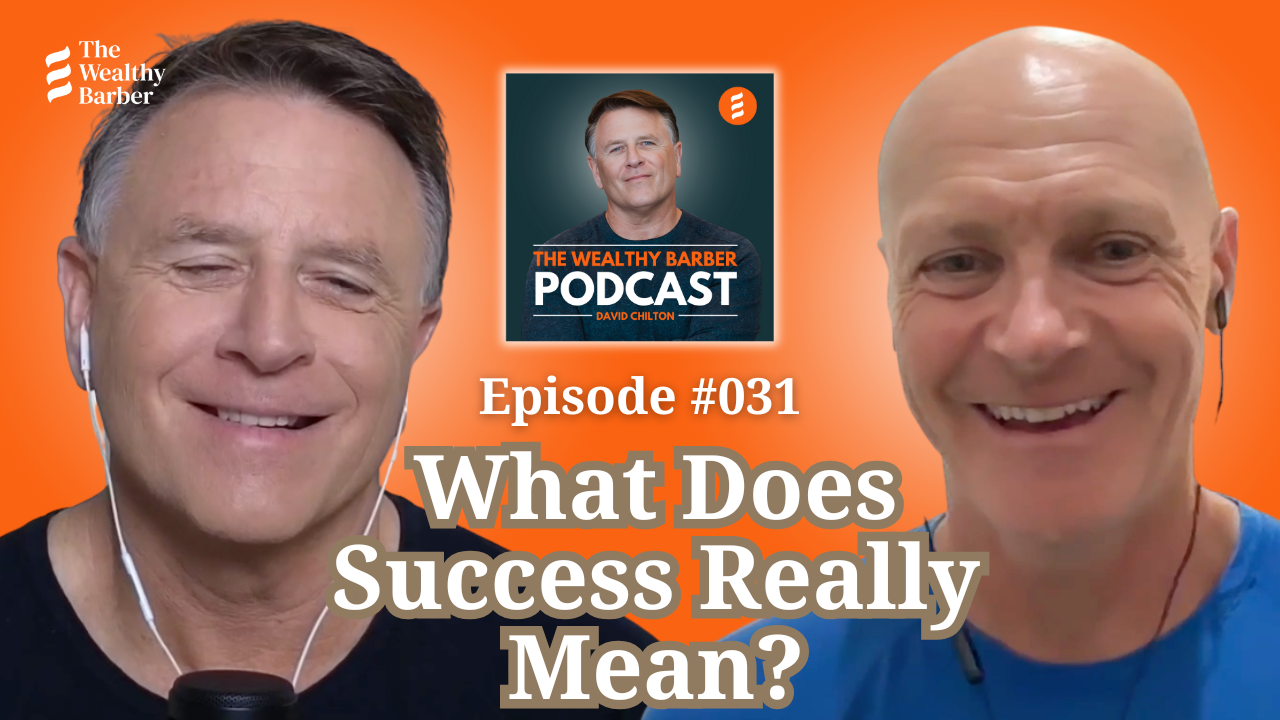

Do Happier People Make Better Money Decisions?
Do happier people make better money decisions?
Shaun Maslyk breaks down the research and explains why emotional well-being might just be a secret weapon for financial success.
💈💈💈
Do happier people make better money decisions?
Interesting. And?
It’s complex, it’s nuanced, and there’s many different variations, but generally speaking the answer is yeah, happier people make better money decisions. And there’s a whole bunch of reasons why, one in particular. Barbara Fredrickson, she did this wonderful work on this broaden and build theory, and this just kind of summarizes what’s happening here.
But her theory is the more positive emotions we experience, the more good moments in life, the more our emotional resilience bank increases. Where our cognitive bandwidth is not like at scarcity. So we can think more clear and have confidence to make decisions that actually align with what we want.
And so happier people have shown to save more, to spend more intentionally with what they really care about. Whereas in the contrast, if we’re in a scarcity mindset or perhaps. We’re not sure what makes us happy and we’re just trying to find things that make us happy and we’re looking at maybe the latest car.
We’re very social creatures and we, social comparison’s a big thing. We might be like, oh, I’m just gonna go buy that car. And that experience is quite fleeting when it doesn’t align with what we really, really desire and value in our lives.
You know, when you look at all this, could there be a causation challenge here though? Causation correlation in that a lot of happier people may have a higher income. And so they’re making better money decisions that’s easier to save when you have a higher income. You may be a little happier with the higher income.
Have those studies been neutralized to take that out, that variable and study people the same income level?
They have, and this is where like social science gets quite nuanced and you can find one research that says one thing and another that says the other.
But globally, like if we walk through the historical research of the, the seminal research around money and happiness, we see, like in 1970, Easterlin first came out with this Easterlin paradox, and that’s this idea that he noticed that wealthier nations had naturally just happier people due to the fact that there was more money around. But this is the paradox. He calls it Eastland Paradox, as those nations continue to grow, it seemed that the happiness levels did not keep up with how much wealth the nation was getting. And so this is that hedonic adaptation.
We adapt to our external circumstances, which is, I mean, from evolutionary psychology, critical. Otherwise, we would’ve died in those terrible conditions in the caveman era.
Feel Confident About Your Finances
Sign up for our Weekly Round-Up of new videos and podcasts released over the past seven days. We won’t spam you or try to sell you a course—promise!

 The Fully Updated "The Wealthy Barber" Is Available Now!