

How Do You Find the Right Financial Advisor? Part 2
 Spending Wisely
  Investing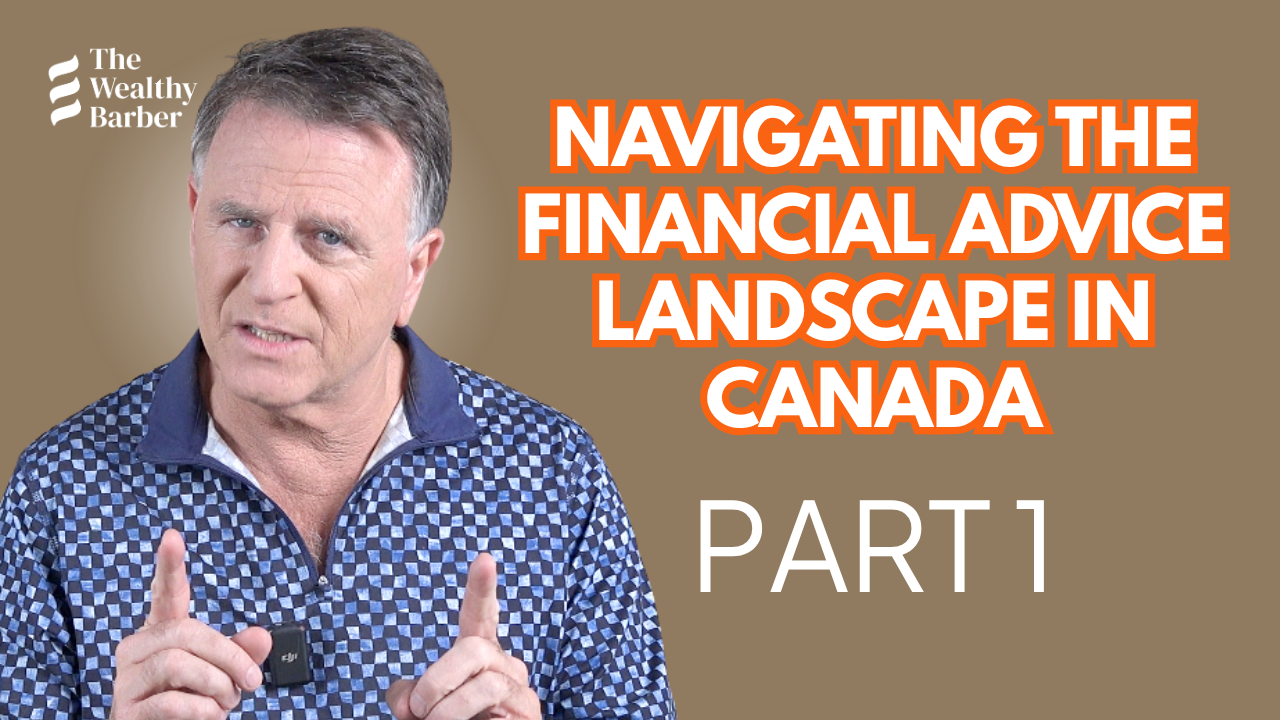
How Do You Find the Right Financial Advisor? Part 2
Part 2: Dave breaks down the three advisor models so you can figure out which one actually fits you.
Stay tuned for Part 3 next week!
💈💈💈
Okay, before I can give specific tips on choosing an advisor, we need to quickly set the table for the types of business models out there in this field. Now, it needs to be noted that here I’m not talking about money coaches who work to motivate you and hold you accountable, though many of them do a wonderful job.
Here I’m talking about people or teams that provide comprehensive financial plans. Tax planning, estate planning, insurance-needs analysis, cash-flow management, retirement-income guidance, et cetera. There are really, admittedly simplifying quite a bit here, but there are really three business models that offer those services to Canadians.
They are defined by how the advisor is compensated. The first is the fee-only model, now often called the advice-only model. You pay a “fee” and you’re provided with a comprehensive plan. Strengths of this model, from your perspective, are this. 1) No bias. Nobody’s trying to sell you anything.
2) The practitioners are usually quite strong communicators as the early part of the process, I find, is quite discussion based. 3) I think the fees are extremely reasonable. Easy for me to say as it’s your money. But for a few thousand dollars, geez, I’ve been impressed with a lot of these plans.
Absolutely outstanding. Weaknesses of the model? Well, the big one is the implementation of the plan stays in your hands. Let’s be honest, it may just go to the drawer. Now firms are starting to address that by referring you to industry participants they trust and usually not taking a kickback, therefore staying unbiased.
And several US firms are now offering strong online tutorials on how a DIYer could do this on his or her own. We’ll see more of that in Canada soon. Probably already are. The second model is the AUM approach. Assets Under Management. Here, you’re charged a percentage of your invested dollars annually for various services
the advisor provides. Strengths: Well, 1) Many advisors using this model work for firms with specialists and experts they can turn to for tricky situations and or fine tuning. 2) Implementation and monitoring are part of the offering, part of the value add. That’s big. Very big. 3) In theory, the advisor should be unbiased as the one-ish percent annual AUM charge stays the same regardless of portfolio
📍
composition
Weaknesses: 1)
A lot of advisors/firms using this model have pretty big minimum account balances. You may like the model, but it may not like you. Yet, anyway. 2) When this model first started gaining traction in Canada, frankly, I shook my head at a lot of what I saw. Often the investment performance was, to be blunt, extremely unimpressive. Official data
backs up that observation. Few accounts that I saw came close to keeping up to the broad-market averages. Plus, many advisors didn’t provide any true financial planning, estate planning, retirement planning, et cetera. I didn’t see many bad plans, but I saw a ton of no plans. Well, good news. Huge improvement here lately.
Huge. Lots of great people using this model now who are providing all of those services very well. So why do I still call it a weakness? Maybe I should have said “potential weakness.” You need to find an advisor who is part of this new breed. An advisor who is providing a complete set of services. Stay tuned for video number #3 on how to do that.
And weakness 3) Occasionally we see some “double dipping” more technically now called stacking, where in addition to the say 0.5% to 1.2% annual fee, you end up also paying some too-high fees embedded in the products within the portfolios. A good friend of mine sent me his info last month — yes, 1%, but PLUS some high-cost mutual funds.
Yikes. On some of his money, he was paying 3.5% a year. Do not do that. The final models, the one that historically has dominated the Canadian market: commission-based compensation. Pretty straightforward there. This model has two pretty big negatives. 1) Obviously, there is a strong potential for conflict of interest.
A product paying a big commission may be selected for that very reason. 2) Often, even with appropriate selected products, the cost on a percentage basis can be extremely high. High enough that it really affects returns and, therefore, future balances. Interestingly, I’m more sympathetic to the situation companies and advisors using this model
find themselves in than most. If they sold only low-cost products, they’d often make no money. Cripe, even with products with higher percentage commissions, they’re sometimes not making a lot because the absolute dollars involved are quite low. This makes it tough to make a business case for providing comprehensive financial planning as that takes a lot of time and effort. And, therefore, many don’t.
It’s easy for people to be critical here, but I get it. These are still businesses. They have to make a profit. The investment platforms that have come around the last 10 years, and LLMs, of course, are now playing a bigger and bigger competing role here, filling in the gap for some. A lot of younger people are becoming DIYers.
Instead of paying high fees, they’re reading books like “The Wealthy Barber” — I’ve heard it’s excellent. Mo told me that. Now, important final point on this model. There are for sure some excellent planners/advisors using this model. Because there’s a potential for conflict of interest, doesn’t mean all practitioners give into it. Many don’t.
What’s more, some provide comprehensive plans because they’re forging a long-term relationship with a client and they think they can grow together. They’re investing that time. A few years ago, in fact, I saw two plans from the same woman using this model, Southwestern Ontario, and they were very well done.
But darn, I still wish the embedded fees were 📍 lot lower. Okay, how do we pick the planner/advisor who is right for us? What amazing tips does the barber have? Deep insights? Life-changing advice? Stay tuned. Video #3 coming soon.
Feel Confident About Your Finances
Sign up for our Weekly Round-Up of new videos and podcasts released over the past seven days. We won’t spam you or try to sell you a course—promise!

 The Fully Updated "The Wealthy Barber" Is Available Now!