

Why Some Retirees Are Investing Less in Stocks
 Investing
  Retirement Planning
Why Some Retirees Are Investing Less in Stocks
I don’t believe in market timing, but…
💈💈💈
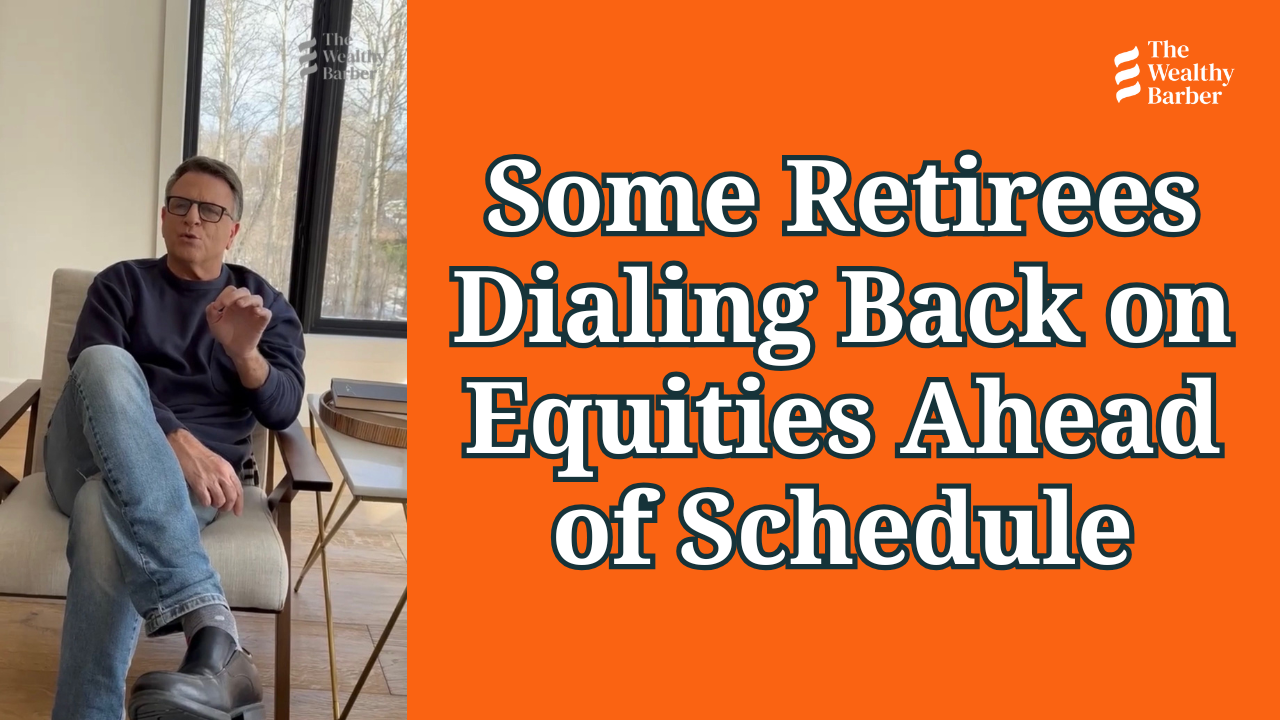
”Retail investors are dummies!” “They buy high, they sell low.” “They’re always letting their emotions guide their decisions!” I don’t know about all of that. Over the last few months, I’ve had several conversations that have made me think otherwise. I mentioned in a video two months ago that a number of “older” Canadians, (55+, many 65+) had reached out to me to share their thinking, to share a decision they had made. Different phrasing, different situation, different details obviously, but in essence, this is what they have told me.
“The equity portion of my portfolio has dramatically outperformed the expected returns my advisor and I have used over the years. Because of that and the fact that I hit on all my ongoing savings goals, I’m in a strong financial position. Better even than we had hoped for. So we’ve decided to lighten up on equities to have a smaller allocation to stocks at this age than we originally planned for.
With the markets being expensive, we felt it was a good opportunity to go somewhat more conservative. Even with these relatively low interest rates on income products, we’re going to be more than fine. Yes, I guess we’re market timing in a way, but it’s really more that we’re in such great shape, we don’t want to take a risk of a big backward step, and we don’t necessarily have the time to wait for a full rebound if it drags out over years and years.”
So, do they sound like dummies? Are they selling low? Is this a decision driven by emotions — by fear and greed — or by quite logical thinking? Look, I have no idea where the markets are going over the next few years. I would argue no one else does either. But it’s hard to dispute these folks’ thinking. By the way, they’d be thrilled that the market stayed strong — they’re not completely exiting, just lessening their allocation percentage. In a way, they’re being the opposite of greedy. They feel they have “enough,” and therefore are turning a bit more cautious. I get it. And hey, by any historical measure, the North American markets are in fact expensive. Valuations are stretched.
And as mentioned, the last time we looked at this, they don’t have to time their re-entry — they’re not coming back with these dollars. That’s a very important point. Hey, if you’re relatively young — say, 45 and under — and saving monthly for your future goals — no, of course, don’t try to time the market. That’s the demographic the updated “The Wealthy Barber” is aimed at.
For them, focus long term, recognize downturns are inevitable. Even big ones. And stay the course. History says that patience will be handsomely rewarded. In fact, remember, as they accumulate shares for the very long term, they should want to buy at lower prices. A prolonged downturn can be their wealth-building ally.
That group needs to always keep the Peter Lynch’s so-important observation in mind: “Far more money has been lost by investors trying to anticipate corrections than lost in the corrections themselves.” We should all keep that written on a card on our fridge. But for the group I described earlier — older, and in better shape than they anticipated being in and better shape than they need to be — the decision many are describing does make some sense. Now, if you’re in that spot, the devil’s in the details. Talk to your advisor before doing anything. Every situation is different. Model all this out with sophisticated software, not the Bristol board that I tend to use. Although I love Bristol board.
Feel Confident About Your Finances
Sign up for our Weekly Round-Up of new videos and podcasts released over the past seven days. We won’t spam you or try to sell you a course—promise!

 The Fully Updated "The Wealthy Barber" Is Available Now!